
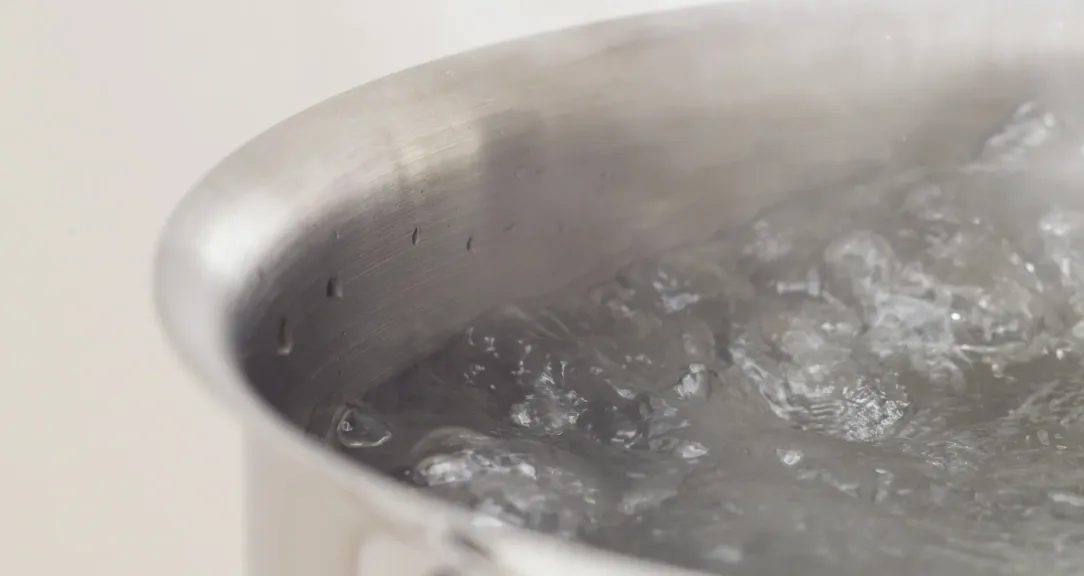
Do You Really Need Salt in Pasta Water? The Italian Pasta Myth
You've probably heard many famous Italian chefs repeating the same golden rule: “Pasta water should be as salty as the sea.”
But have you ever wondered whether this is actually true? Do we really need that much salt to cook pasta properly, or is it simply one of those cooking rules that everyone keeps repeating without ever questioning?
We are Vallì & Dave, and we are Pastatarians because we make (and eat) pasta every single day! Today, we want to explore one of the most common myths about Italian pasta with you. And believe us, the truth might surprise you!
Should Pasta Water Really Be as Salty as the Sea?
FALSE!
Seawater is actually much saltier than the water normally recommended for cooking pasta!
On average, seawater contains around 35 grams of dissolved salts per liter, while a commonly recommended amount for cooking pasta is approximately 7–10 grams of salt per liter.
So, if you followed this catchy, attention-grabbing advice literally and made your pasta water as salty as the sea, you'd probably end up with pasta that tastes far too salty!
But there's something else we should consider.
The salt we add to pasta water doesn't all disappear down the drain when we strain our spaghetti. Some of it is absorbed by the pasta during cooking, which means that the more salt we add to the water, the more sodium can end up on our plates.
Now, we're not saying that you should never add salt to pasta water (although we believe that pasta cooked without salt is tastier and healthier). The choice is yours, but perhaps we should stop taking every attention-grabbing cooking rule quite so literally!
Do We Actually Need Salt to Cook Pasta Properly?
The answer is NO!
Salt certainly adds its own flavor to pasta, but it isn't necessary for pasta to cook properly or reach that wonderful al dente bite we Italians love so much.
And this is something we know very well because, since 2010, we've been following our SENZA philosophy, preparing our food without adding salt, sugar, or preservatives.
Yes, even our homemade pasta!
When we first started cooking this way, we discovered just how many wonderful flavors were already hiding inside the ingredients themselves. We learned to appreciate how every flour has its own character, its own taste, and even its own particular bite. How different grains create different sensations in your mouth, and how all of this can completely change the experience of enjoying a simple plate of pasta.
Over time, our palate changed, and we learned to appreciate flavors we hadn't paid much attention to before.
And believe us, once you start recognizing these little differences, the world of homemade pasta becomes even more fascinating!
But does this mean adding salt to pasta water is wrong? Absolutely not!
Salting pasta water is a very old Italian tradition. In fact, we can find references to cooking a type of lasagne in salted boiling water in the Liber de coquina, an Italian medieval cookbook dating back to the early 1300s.
So we're certainly not suggesting that centuries of Italian culinary tradition are wrong!
What we're saying is that there is a difference between something we do because it's part of our culinary tradition and something we actually need to do for pasta to cook properly.
If you enjoy adding salt, go ahead. Just pay attention to how much you're using, especially when your sauce and other ingredients already contribute plenty of flavor and sodium.
Did Every Italian Family Use Salt When Cooking Pasta?
Not necessarily!
Today, salt is inexpensive and easy to find, but centuries ago, things were very different.
Salt was a precious commodity, especially because it was essential for preserving food long before refrigerators existed. And depending on where people lived and their family's financial circumstances, they couldn't always afford to use it as freely as we do today.
Imagine being a mother preparing food for your family hundreds of years ago. If you had a limited amount of salt, would you use it to preserve meat or fish for the coming months, or would you use it to season a pot of pasta water that you would eventually throw away?
It's an interesting question, isn't it?
And although we cannot know exactly how every Italian family cooked its pasta, we do know that economic circumstances, local traditions, and even taxes influenced how people used salt.
And that's one of the things we love most about exploring the history of pasta. Behind even the simplest ingredients, there is often a much bigger story waiting to be discovered.
What Happens When You Cook Pasta Without Salt?
This is where things become particularly interesting for us.
When you remove added salt from pasta water, you're no longer relying on that seasoning to influence the taste of your pasta. Instead, you have the opportunity to discover the flavors of the ingredients used to make it.
And if you're passionate about homemade pasta, you already know that not all doughs taste the same.
An egg pasta made with soft wheat flour doesn't have exactly the same flavor as one made with durum wheat semolina. A whole wheat dough brings different aromas, while other grains introduce their own distinctive characteristics.
Of course, whether you prefer pasta cooked in salted or unsalted water is a matter of taste. But trying both can be a wonderful little experiment, especially if you've never questioned the habit of adding salt to the water.
And that's something we love about homemade pasta. There's always something new to discover, even in the simplest everyday gesture.
So, Is Salting Pasta Water a Myth?
Not exactly!
The myth isn't that Italians add salt to pasta water. The myth is that pasta water must be as salty as the sea, or that pasta cannot cook properly without salt.
Salting the water is a tradition and a seasoning choice, not a technical requirement. And that's a very important distinction.
Because making homemade pasta isn't just about following a recipe or repeating everything we've always been told.
It's also about understanding the ingredients, discovering why we do certain things, and sometimes finding a different approach that works wonderfully for us.
And if there's one thing our SENZA journey has taught us, it's that questioning a habit can sometimes lead to the most wonderful discoveries.
And if you're curious to discover more about our SENZA philosophy, Italian pasta traditions, and all those little pasta-making secrets that can change the way you cook, come and join our Pasta Fam.
It's our free global pasta family rooted in Italy, where pasta lovers from all over the world come together to share, learn, ask questions, and keep the wonderful traditions of homemade pasta alive.
Inside, you'll also find our Pasta Diary, where we explore fascinating pasta stories, practical cooking tips, and all those little details that make the world of pasta even more interesting.
JOIN THE PASTA FAM — IT'S COMPLETELY FREE!
We can't wait to find out inside our community whether you're Team Salt or Team No Salt!
See you next time!
Vallì & Dave
Vallì & Dave
if you love pasta so much
WELCOME TO THE PASTA LOVERS HOUSE!
Where the magic of homemade pasta brings people together
From our home in Italy to yours... let's keep the traditions of authentic Italian homemade pasta alive, together, like a big family.


Vallì & Dave | We are Pastatarians
We make (and eat) Pasta every single day.
The most entertaining Pasta Experts from Verona. Since 2019, we 've opened the doors of our home in Verona and our Pasta Lovers House, teaching people how to have fun in the kitchen while rediscovering the flavors and tastes of the shape of pasta—within the rhythm of modern life. Welcome home! Discover more


