
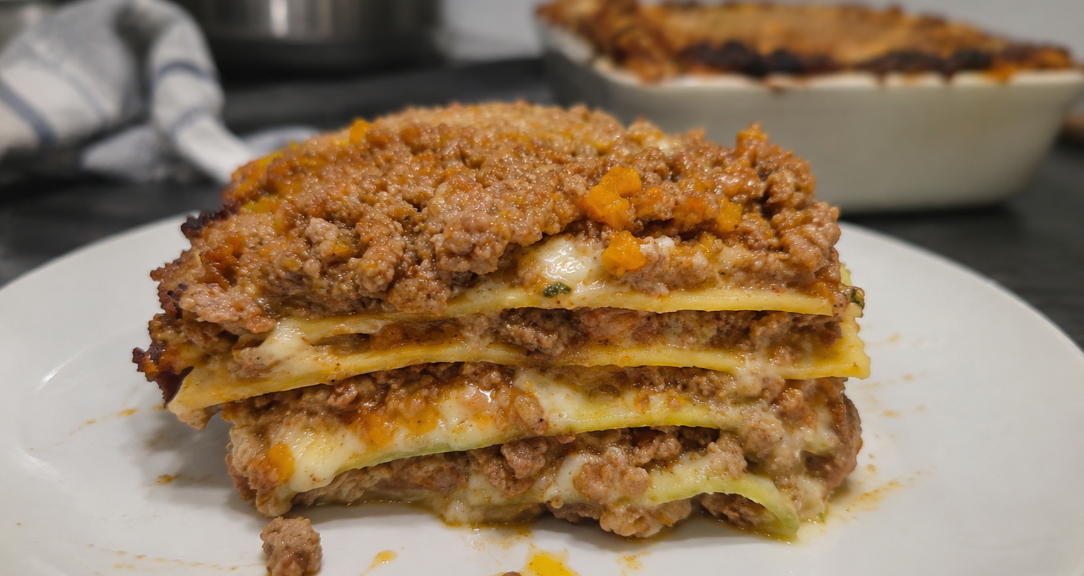
Ricotta or Béchamel? What really goes into authentic Italian lasagna?
When you think about Italian lasagna, what comes to mind?
Probably that wonderful dish that warms your heart and fills your belly, made with beautiful layers of pasta, rich meat ragù, and… wait a minute! This is probably where you suddenly stop, because a very important question comes to mind.
Ricotta or béchamel? Which one belongs in real Italian lasagna?
Well, the answer is… it depends!
Because, as with almost everything in Italian cuisine, things are never quite that simple.
Travel from Naples to Bologna, passing through Veneto and Marche, and you'll discover that one of the most beloved Italian dishes in the world can change completely from one region to another. The pasta sheets, the fillings, the sauces, and even the names can be surprisingly different. And sometimes, we don't even call it lasagna!
We are Vallì & Dave, two true Pastatarians who make (and eat) pasta every single day, and today we'd love to take you on a little journey through Italy to discover some of these wonderful regional traditions. Ready?
Let's start with the lasagna that celebrates abundance: The Lasagna Napoletana
Our first stop is Naples, where lasagna is traditionally associated with Carnival, especially Martedì Grasso, or Shrove Tuesday or Fat Tuesday. Before the beginning of Lent, families would prepare a rich, festive dish to celebrate together. And when we say rich, we really mean it!
Traditional Neapolitan lasagna usually features wide pasta sheets made with durum wheat semolina, often with beautiful ruffled edges, a little like very wide Mafaldine. But the real surprise is hidden between the layers.
The filling is an explosion of ingredients: traditional Neapolitan ragù, ricotta, mozzarella or provola, tiny meatballs called polpettine, and, depending on the family recipe, hard-boiled eggs and salami. Can you imagine discovering all those little treasures hidden between the pasta layers?
And there's something fascinating about the ragù itself. Unlike the familiar Bolognese-style meat sauce, Neapolitan ragù is traditionally made by slowly cooking whole pieces of meat in plenty of tomato sauce. The meat is often removed before assembling the lasagna and served separately or used in other preparations, while that incredibly flavorful sauce becomes part of the dish.
And what about the béchamel?
Well, in traditional Neapolitan Carnival lasagna, ricotta is the star of the creamy filling, together with mozzarella or provola. Béchamel isn't generally part of this version.
Of course, every Neapolitan family has its own recipe, with little differences passed down through generations. But the spirit remains the same: a dish prepared to celebrate, share, and enjoy together.
Now let's continue the lasagna that tastes like home: The Pasticcio Veneto
We're coming to Veneto, where my Nonna Bianca and Nonna Gianna and Dave’s Nonna Rosanna were from.
And in their homes, we didn't eat lasagna. We ate pasticcio! Funny, isn't it?
In everyday Italian, pasticcio can also mean a mess, but believe us, there's nothing messy about a delicious homemade pasticcio coming straight out of the oven! Here in Veneto, pasticcio is often simply what we call lasagne al forno.
Imagine layers of traditional fresh egg pasta, a rich meat ragù, creamy béchamel, and grated Parmigiano, all baked together until the top becomes beautifully golden. That's the kind of pasticcio that brings back memories of our grandmothers' kitchens. But compared with some other Italian regions, Veneto has another interesting tradition: pasticcio is incredibly versatile.
Alongside the classic meat version, you'll find wonderful variations prepared with seasonal ingredients, such as pumpkin, mushrooms, or the famous Radicchio Rosso di Treviso.
And each one brings a completely different personality to the dish.
But, as usual in Italy, things couldn't possibly be that simple!
The word pasticcio isn't exclusive to Veneto, and it doesn't always mean lasagna. Depending on where you travel, it can refer to different baked preparations, sometimes made with other pasta shapes or even enclosed in pastry. So while in Veneto someone might invite you over for a delicious tray of lasagne, somewhere else in Italy a pasticcio could be something completely different.
Different city, different name, different tradition.
Welcome to Italy!
Let’s meet the lasagna with its own identity: The Vincisgrassi.
We are in the Marche, in central Italy, where we discover a dish with a very particular name: Vincisgrassi. At first glance, you might think you're looking at a traditional pasticcio or lasagna, with layers of fresh egg pasta, meat sauce, béchamel, and grated cheese.
So what's the difference?
Well, the real secret is in the ragù.
Traditional Vincisgrassi alla Maceratese are prepared with a particularly rich sauce made with different meats, including poultry, and organ meats such as chicken livers and gizzards.
These ingredients give the ragù a deep, distinctive flavor that makes it very different from the meat sauce you might find in other Italian lasagne. The dish is assembled in numerous layers and baked until the surface develops that wonderful golden-brown crust we all love.
It's a beautiful example of how the countryside, local ingredients, and the traditions of using every part of an animal have shaped Italian cooking over generations.
And yes, in this version, béchamel is part of the traditional preparation
Now, you're probably thinking: “Okay, Vallì & Dave, that's all very interesting… but what about the famous Lasagne alla Bolognese? Aren't those the REAL Italian lasagne?”
Well, that's where our journey becomes even more interesting.
Because the traditional Bolognese recipe has something very special that many people around the world don't even know about. And no, we're not just talking about the ragù!
So, ricotta or béchamel? And what makes traditional Lasagne alla Bolognese different from all these other versions?
Let's discover it together inside our Pasta Diary, where we continue this journey through Italian lasagna traditions.
The Pasta Diary is part of our Pasta Fam, our free global pasta family rooted in Italy, where we share stories, traditions, practical tips, and little discoveries from our everyday life as Pastatarians.
And the best part? Joining is completely free!
JOIN THE PASTA FAM AND DISCOVER THE BOLOGNESE LASAGNA — IT'S FREE!
Because pasta is never just pasta.
A big hug,
Vallì & Dave
if you love pasta so much
WELCOME TO THE PASTA LOVERS HOUSE!
Where the magic of homemade pasta brings people together
From our home in Italy to yours... let's keep the traditions of authentic Italian homemade pasta alive, together, like a big family.


Vallì & Dave | We are Pastatarians
We make (and eat) Pasta every single day.
The most entertaining Pasta Experts from Verona. Since 2019, we 've opened the doors of our home in Verona and our Pasta Lovers House, teaching people how to have fun in the kitchen while rediscovering the flavors and tastes of the shape of pasta—within the rhythm of modern life. Welcome home! Discover more


