
Why Gluten-Free Pasta Dough Breaks, Tears, or Feels Too Hard?
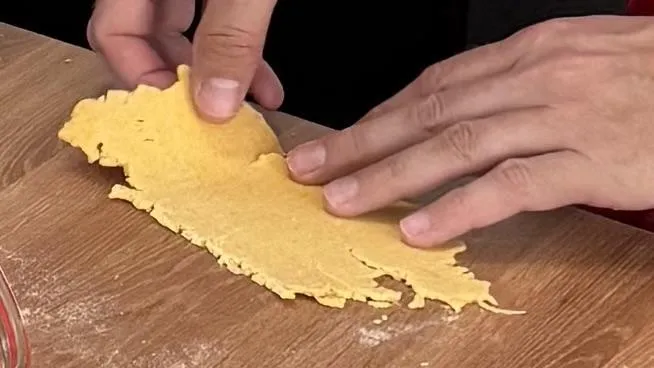
Why Gluten-Free Pasta Dough Breaks, Tears, or Feels Too Hard?
Making homemade gluten-free pasta is wonderful, but let’s be honest: sometimes it can feel like a real challenge.
Maybe your dough keeps breaking into pieces instead of coming together.
Maybe it feels hard as a rock.
Maybe it tears while you are using the pasta machine.
If this has happened to you, take a deep breath.
It is not your fault.
The real problem is usually very simple: gluten-free pasta dough does not behave like traditional wheat pasta dough. And if no one explains the difference, it is very easy to think you are doing something wrong. But you are not.
In traditional pasta, gluten works like a natural “glue.” It helps create elasticity, strength, and structure. Gluten-free pasta dough does not have that natural support, so if we want a dough that is smooth, workable, and strong enough to shape, we need to understand how to help it.
You simply need to understand what gluten-free pasta dough needs.
Here are 3 common gluten-free pasta dough problems and why they happen.
1. Why Does Gluten-Free Pasta Dough Break Instead of Coming Together?
One of the most common problems with homemade gluten-free pasta is a dough that breaks into pieces and refuses to become one smooth ball. You mix the flours, add the liquid, start kneading, but instead of becoming smooth and workable, the dough cracks, crumbles, or falls apart in your hands.
This happen for two main reasons:
Not enough moister
The dough is missing structure
Gluten-free flours absorb liquids differently from wheat flour, and every flour behaves in its own way. Some need more hydration, some absorb liquid slowly, and some can make the dough feel dry even when you followed the recipe.
At the same time, because there is no gluten, the dough needs extra support to stay together.
Without the right balance of moisture and structure, gluten-free pasta dough can become fragile, crumbly, and difficult to shape, especially if you want to roll it, cut it, or use it for filled pasta.
Want Vallì’s practical tips for fixing this problem?
We continue this article inside our Pasta Diary, where we explain what can help gluten-free pasta dough become smoother, stronger, and easier to work with.
Join the Pasta Fam here — it’s free!
2. Why Does Gluten-Free Pasta Dough Feel Hard as a Rock?
Another common gluten-free pasta problem is dough that becomes too hard. At first, it may look fine. Then, after a few minutes, it becomes stiff, dry, and difficult to shape.
This usually happens for four main reasons:
-You used only one naturally gluten-free flour
-There isn’t enough moisture in the dough
-You didn’t protect the dough from the air
-You let the dough rest
Now, I understand gluten-free flours pretty well… but I’ll be honest: the first time I started experimenting with them, and we’re talking way back in 2006, I made one spectacular mistake. I used rice flour. Just rice flour. The result?
A complete disaster. 😂
The dough became so hard that, if I had thrown it against a wall, I’m pretty sure the wall would have come off worse.
That experience taught me something very important:
gluten-free flours don’t absorb liquids the same way wheat flour does and some of them continue absorbing moisture even after the dough has been mixed. So a dough that feels soft enough at the beginning can suddenly become dry, stiff, and incredibly difficult to work with.
That little disaster was the beginning of a much bigger learning process for me.
Inside the Pasta Diary, I’ll show you what I learned from it and how to manage each of these four problems so your gluten-free dough stays workable instead of turning into a rock. Join the Pasta Fam to continue reading — it’s completely free!
3. Why Does Gluten-Free Pasta Dough Tear in the Pasta Machine?
Gluten-free pasta dough has less elasticity, so it cannot always handle the same pressure, length, or movement as traditional wheat pasta dough. Of course, traditional pasta can tear too. But usually, it tears for different reasons. With gluten-free dough, the most common problems are connected to moisture, structure, thickness, and sheet management.
So if your gluten-free pasta dough tears in the pasta machine, these are the first things to check:
-The dough may be too dry.
-The dough may not have the right structure to handle the pressure of the pasta machine.
-You may have skipped some thickness settings and started rolling the pasta too thin too quickly.
-You may have used pieces of dough that were too large, creating pasta sheets that were too long and heavy for gluten-free dough to handle.
And again, this does not mean you are doing everything wrong.
It simply means your gluten-free dough needs a different approach.
Join the Pasta Fam for free and continue this article inside our Pasta Diary. Inside, we’ve shared our practical tips to help you avoid tearing when using the pasta machine with gluten-free dough, plus many other little secrets to help you navigate this beautiful, vast world of homemade pasta.
Remember: gluten-free pasta is not impossible.
It is just different.
And once you start understanding it with the right guidance, that is where the magic begins.
Everything starts to make more sense.
Everything becomes easier.
And most importantly, you can finally stop blaming yourself.
Stop thinking you are doing everything wrong.
Take a breath.
Start learning how to read the dough.
And if you want a guide, we are here to help.
Join the - Pasta Fam - it’s free.
Here we talk, cook, learn, and share a lot of pasta.
We are waiting for you inside.
A big hug,
Vallì & Dave
if you love pasta so much
WELCOME TO THE PASTA LOVERS HOUSE!
Where the magic of homemade pasta brings people together
From our home in Italy to yours... let's keep the traditions of authentic Italian homemade pasta alive, together, like a big family.

Vallì & Dave | We are Pastatarians
We make (and eat) Pasta every single day.
The most entertaining Pasta Experts from Verona. Since 2019, we 've opened the doors of our home in Verona and our Pasta Lovers House, teaching people how to have fun in the kitchen while rediscovering the flavors and tastes of the shape of pasta—within the rhythm of modern life. Welcome home! Discover more


